The Glue Code Time Bomb: How Forgotten Internal Scripts Are Quietly Becoming Enterprise Security's Worst Nightmare
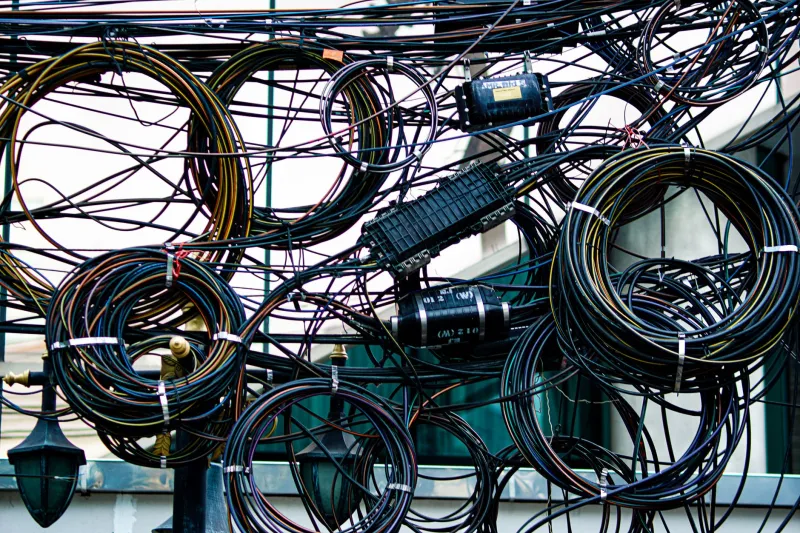
Somewhere in your company's infrastructure, there's a Python script written in 2017 by a developer who left two years ago. It runs every night at 2 a.m. It touches your production database. Nobody knows exactly what it does. Nobody wants to find out.
Welcome to the shadow infrastructure problem — one of the least glamorous, most dangerous, and most consistently ignored issues in enterprise tech. While security teams are busy chasing AI-generated phishing attacks and zero-day exploits, a quieter threat has been accumulating inside the walls of nearly every mid-to-large organization in America: thousands of janky, undocumented, unloved internal tools that have become load-bearing walls in systems nobody officially designed.
How This Happens (And Why Nobody Stops It)
It never starts as a crisis. It starts as a shortcut.
A DevOps engineer needs to automate a tedious deployment step, so they write a quick Bash script. A data analyst builds a scrappy Python tool to pull reports because the official BI platform is too slow. A backend dev duct-tapes together a webhook handler to sync two systems that were never meant to talk to each other. All of these are reasonable decisions made under time pressure — and all of them eventually become permanent.
The problem isn't that people write internal tools. The problem is that organizations treat internal tooling as a second-class citizen from the moment it's created. There's no code review requirement. No security audit. No documentation mandate. No designated owner. The tool ships, it works, and it immediately starts collecting dust while quietly running critical operations.
Multiply that pattern across hundreds of teams over a decade, and you get what security researchers are increasingly calling "shadow infrastructure" — a parallel tech stack that nobody chartered, nobody fully understands, and nobody has a complete inventory of.
The Ownership Vacuum
Here's the organizational dynamic that makes this so sticky: internal tools are built by people who are rewarded for shipping external products. The incentive structure in most tech organizations points squarely toward customer-facing features, revenue-generating systems, and executive-visible projects. The glue code holding everything together doesn't show up in OKRs.
So when that 2017 script breaks, the response is usually to patch it just enough to keep it running — not to refactor it, document it, or transfer it to a team that will actually maintain it. Over time, institutional knowledge about these tools lives entirely in the heads of people who may or may not still work at the company. Turnover makes this exponentially worse.
A 2023 survey by Sonatype found that the average enterprise has somewhere between 3,000 and 5,000 internal applications and scripts that aren't tracked in any official asset management system. That's not a rounding error. That's a sprawling, uncharted territory inside your own walls.
Why AI Is About to Make This Much, Much Worse
For most of the last decade, the shadow infrastructure problem was mostly a reliability and efficiency issue. Scripts would fail silently, data pipelines would drift, tools would break during upgrades. Annoying, costly, but manageable.
AI and automation are about to change the threat profile entirely.
Here's the core issue: as enterprises roll out AI-powered workflows, agentic automation, and LLM-integrated pipelines, those systems need to interact with existing infrastructure. And existing infrastructure includes all those undocumented scripts and internal tools. Suddenly, an AI agent that's been given broad system access to "help automate operations" is invoking a five-year-old shell script with hardcoded credentials that nobody has rotated since the Obama administration.
Attackers understand this. Supply chain attacks — like the SolarWinds breach or the more recent xz Utils backdoor — have demonstrated that internal tooling and build pipelines are high-value targets precisely because they're trusted implicitly and scrutinized rarely. Compromising a forgotten internal tool that runs with elevated privileges is often far easier than finding a zero-day in hardened production software.
The attack surface isn't just external anymore. It's the stuff inside your own house that you stopped paying attention to.
The Accountability Gap Nobody Wants to Address
So why hasn't this been fixed? Partly because it's unglamorous work. Auditing and documenting internal tooling doesn't generate press releases or conference talks. It doesn't feel like innovation. It feels like cleaning up someone else's mess — which, technically, it is.
But there's also a structural problem: in most enterprises, there's no clear owner for this category of risk. Security teams focus on external threats and compliance frameworks. Engineering teams focus on product delivery. Platform and infrastructure teams are already stretched thin managing cloud costs and reliability. Internal tooling falls into the gap between all of them.
Some forward-thinking organizations have started creating "developer experience" or "internal platforms" teams specifically chartered to own this layer of the stack. But these teams are still relatively rare, and they're often the first to get cut when headcount gets tight.
What Actually Needs to Happen
The fix isn't technically complicated. It's organizationally hard.
First, organizations need to actually inventory what they have. That means static analysis tooling, code scanning, and yes, some uncomfortable conversations with engineering leads about what's running in their environments. Tools like Snyk, Semgrep, and even GitHub's built-in dependency scanning can help surface what's lurking in internal repos — but only if leadership mandates that internal code gets the same treatment as external code.
Second, the ownership model needs to change. Every internal tool that touches production systems, handles credentials, or processes sensitive data should have a named owner and a deprecation plan. If nobody is willing to claim ownership, that's a signal the tool should be shut down — not kept running indefinitely on inertia.
Third, AI integration projects need to include an internal tooling audit as a prerequisite. Before you let an LLM agent start invoking your internal APIs and scripts, you need to know what those scripts actually do, what access they have, and whether they're safe to expose to an automated system.
None of this is exciting work. But the alternative — discovering your shadow infrastructure's vulnerabilities through a breach rather than an audit — is significantly less exciting.
The Uncomfortable Truth
Every enterprise has this problem. The ones that will handle the next wave of AI-driven security threats are the ones willing to look honestly at the infrastructure they've been pretending doesn't exist.
That 2 a.m. script touching your production database? It's not going to fix itself. And the longer it runs unexamined, the more it looks less like technical debt and more like an unlocked door in a building you thought was secure.
The glue holding your operations together deserves more than benign neglect. It deserves the same scrutiny you'd give anything else that runs with root access at 2 in the morning.